Bio
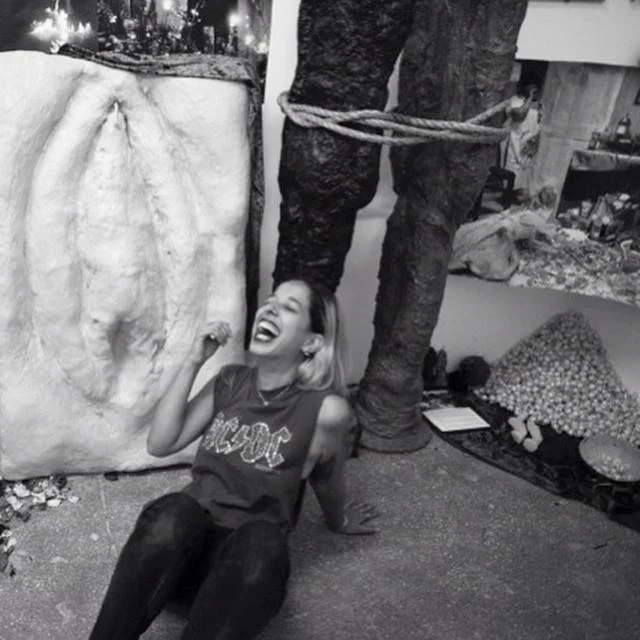
Artist Bio:
Jehdy Vargas is a Dominican-York multidisciplinary artist whose practice explores autobiography, memory, spirituality, gender-based violence, migration, and resilience through painting, installation, assemblage, and performance. Drawing from personal experience, ancestral practices, and activism, she transforms images, ritualistic materials, found objects, and the body into visual narratives that connect private histories with collective memory. Her work examines the intersections of identity, trauma, colonialism, and liberation, using art as a form of resistance, healing, and transformation. Based in New York, Vargas continues to create work rooted in truth-telling, cultural reclamation, and collective liberation.
Jehdy took part in Meca International Art Fair in Dominican Republic. She completed two 5 month residency at Mana Contemporary Art center provided through Martin and Lorraine Kaminsky studio program. She has participated in many group shows including: ESKFF 2x2 Exhibition at Mana Contemporary, ESKFF Paddel 8 auction exhibited at Mana Contemporary, exhibition at Made In America’s Artist and Culture Village in Philadelphia, The All Female Last Brucennial’s exhibited through Bruce High Quality and Vito Schnabel in New York City, Brooklyn Museum’s Go Open Studios, and Sound of Art Group show at Heath Gallery in Harlem, Group show at Trestle Art Gallery, Performance Art pieces at MOMA PS1 and curated art fundraising art auction called The Hood art Auction for group of orphaned children that she has worked for in the Dominican Republic.
Press:
April 23, 2024
April 24, 2024

October 18, 2022

October 12, 2022

2022
2022
February 15, 2019

2021





Artist Statement:
I’m a Dominican York multidisciplinary artist whose work explores autobiography, memory, spirituality, gender-based violence, and resilience through painting, installation, performance, and assemblage. Drawing from personal experiences, ancestral practices, and activism, I create emotionally charged works that blur the line between private confession and collective social reflection. Through the use of ritualistic materials, organic elements, and the body itself, my practice investigates healing, identity, and our interconnected relationship to nature, trauma, and liberation.
My body of work exists in the space between my internal world and the external realities that shape it. Through painting, installation, sculpture, assemblage, and performance, I investigate memory, spirituality, violence, migration, love, eroticism, depression, resilience, and survival. My work functions as both a private confession and a collective archive—documenting personal and political histories as they unfold in real time.
For five years, I lived in the Dominican Republic reconnecting with my motherland, my ancestry, and the spiritual practices that shaped generations of my family. My grandmother practiced Santería both in the Bronx and in the Dominican Republic, and her rituals deeply inform my artistic language. Santería and Afro-diasporic spiritual traditions continue to be stigmatized across the Caribbean because of colonial violence and anti-Blackness; enslaved Africans were forced to hide their deities behind Catholic saints in order to preserve their spiritual practices under colonization. Even today, many of these sacred figures are represented through whitened imagery that erases their African origins. My work reclaims these histories and reconnects spirituality to Blackness, ritual, memory, and resistance.
While living in the Dominican Republic during the COVID lockdown, I was forced to undergo a clandestine abortion in a country where abortion remains criminalized under all circumstances and bodily autonomy is still denied to women. Out of this experience, my menstrual blood series was born. Using menstrual blood, Florida Water, bed sheets, flowers, and organic materials, I transformed grief, rage, and survival into visual testimony. These works confront the violence of forced silence and the realities many women endure in secrecy.
My practice extends beyond the studio into activism and public intervention. In the Dominican Republic, I created performances where I publicly painted with abortion blood and washed blood-stained sheets in public spaces as acts of protest against the violence of clandestine abortions. I also participated in anti-colonial performances confronting the legacy of Christopher Columbus and ongoing systems of white supremacy in the Caribbean. During one public action, I staged a die-in with sculptures covered in blood-stained white sheets near a Columbus monument; the protest was violently interrupted by the fascist nationalist group Antigua Orden, whose ideology glorifies Spanish colonial ancestry and anti-Black nationalism.
My activism also focused on environmental justice and anti-extractivism. For ten weeks, I participated in performance actions denouncing Barrick Gold for the destruction and pollution of land and water in the Dominican Republic. In one action, we unfurled a banner reading “El agua vale más que el oro” (“Water is worth more than gold”) in front of polluted rivers. Other performances included interventions around colonial monuments, including actions depicting Anacaona reclaiming power over Columbus and banners publicly declaring “Colón es un violador” (“Columbus is a rapist”).
Because of threats and violence connected to far-right nationalist groups, I ultimately had to leave the Dominican Republic. Now based in New York, I continue organizing with the Dominican diaspora around anti-Black racism, Haitian solidarity, women’s rights, housing insecurity, and collective liberation. Through my work with the organization Decolonize This Place, I participated in months of protests and performances outside the United Nations demanding justice for Gaza and calling attention to global systems of displacement, militarization, and colonial violence.
Through my art, I bear witness to injustice and transform pain into beauty, ritual, resistance, and collective memory. I use creativity to honor my Afro-Latin heritage and to build cultural bridges that allow others to see themselves fully. As both an artist and mother, my work is rooted in protection, tenderness, truth-telling, and survival. Even in its rawness, my practice insists on hope—the possibility of rebuilding, healing, and imagining a world that is more just, more human, and more free.